Stajic Solutions

Two Senior Product Engineers

Building software got easier. Building good software didn’t.

We build new products and turn AI-built prototypes into production systems — owning product, UX, architecture and engineering end to end.

Where teams usually find us

Case 01

“We shipped an AI-built prototype. Now it has to hold up.”

It works and customers are in it — but the permissions, data model and edge cases were never actually designed.

Case 02

“We need a product built, not a team hired.”

Funding is there, the roadmap is there, hiring four people first is not the plan.

Case 03

“The hard part is nobody’s job.”

The AI feature, the data model, the migration — the work the team keeps deferring.

01 — Selected work

Private repos, so: the systems, not the screenshots.

01 · Automotive platform

From AI-built prototype to production platform

A Lovable/Supabase app was already holding customer data on a model that couldn’t support it. We rebuilt the schema and permissions, then automated the operations on top.

  • listing prep 40 min
  • under 5 min
  • single dealer
  • multi-tenant
  • no access control
  • row-level policies

React · TypeScript · Supabase · AI

02 · AI workflow platform

Complex enterprise workflows made usable

Operators needed to build and run reusable AI workflows without engineering in the loop. We designed the product model and built the engine underneath it.

  • trigger
  • steps
  • tool calls
  • review
  • output

Next.js · Node · Postgres · Queues

03 · Document intelligence

A retrieval product a compliance team trusts

Extraction was accurate most of the time, which no audit accepts. We rebuilt retrieval around verifiable citations and hardened it for enterprise tenancy.

  • “usually correct”
  • cited to source
  • silent failures
  • review queue
  • shared tenancy
  • isolated per customer

RAG · Postgres · AWS

Everything above is under NDA or in a private repo. On a call we’ll go through the architecture and the trade-offs in as much depth as you want — and put you in touch with the people we built it for.

02 — Why two engineers

Two senior engineers. No layers in between.

Direct communication

You talk to the people making the decisions.

Senior execution

No junior work handed down the chain.

Small-team velocity

Two people delivering what used to need a team.

Shared ownership

Both of us hold the whole product, not tickets.

03 — What we do

idea → production

Build the product

From vague requirements to architecture, UX, implementation and shipping. You bring the direction; we turn it into working software.

prototype → production

Make the prototype real

Permissions, tenancy, data modelling, testing, observability, infrastructure — the edge cases demos don’t encounter.

hard problem → shipped

Own the hard part

Agents, automation, data pipelines, integrations, migrations — the work your team keeps deferring.

04 — AI-native engineering

AI is leverage, not ownership.

We use coding agents heavily throughout development. Architecture, product decisions, security, review and production reliability stay with us.

  1. 01Product problemus
  2. 02Architecture & specificationus
  3. 03AI-assisted implementationagents
  4. 04Engineering review & verificationus + CI
  5. 05Productionowned

05 — Technology

  • React / Next.js
  • TypeScript
  • Node.js
  • PostgreSQL / Supabase
  • AWS   Vercel   Docker   React Native   OpenAI   Anthropic   Redis   Queues

Technology is selected around the product rather than the other way around.

06 — About

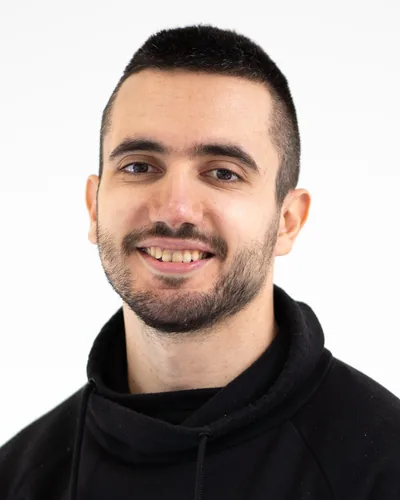
Igor

Senior Product Engineer

Full-stack engineer with a product, UX and frontend-architecture bias. Turns a vague business problem into screens and system boundaries that still hold six months later.

product · ux · frontend architecture

Srdjan

Senior Product Engineer

Full-stack engineer with a backend, data and infrastructure bias. Finds the authorization hole and the query that falls over at ten times the data.

backend · systems · integrations · infra

07 — How we engage

Product Build

Own a new product or a substantial area of one.

Workstream Ownership

We take ownership of a difficult product or technical area inside your team.

Technical Takeover

Audit and assume ownership of an inherited codebase.

Hardening Sprint

Short engagement on the biggest technical risks — starts with a two-week audit you keep either way.

  1. 01

    Understand

    Product, users, existing system.

  2. 02

    Define

    Scope, UX, architecture, approach.

  3. 03

    Build

    Short iterations, frequent releases.

  4. 04

    Ship & improve

    Deploy, monitor, keep improving.

08 — The first two weeks

Judge us on the work, not on our portfolio page.

We can’t show most of what we’ve built, so the start of an engagement is small, concrete and easy to walk away from.

Day 1–2

Technical deep-dive

A call on your codebase or your problem, in whatever depth you want. Architecture questions, not sales questions.

Week 1

Written assessment

Risks, priorities and a plan you own — useful even if you hand it to someone else.

Week 2

Something shipped

One real fix or feature in production, so you can judge the code rather than the pitch.

Building something ambitious?

Tell us what you’re building, where it is today, and what’s in the way. If there’s a codebase involved, we’ll sign your NDA before we look at it.

Usually working with one or two companies at a time.
hello@stajics.com

Start here

Tell us about the project

A few questions about what you’re building and where it stands. Takes about two minutes.

  1. 01You send the details
  2. 02We reply within one business day
  3. 03Technical deep-dive call, NDA first if needed
Start the conversation →

or email hello@stajics.com